
ESG Updates
Resident Resources for Sustainable Living
Centerspace is committed to sustainability for the betterment of our team members, residents, and communities. We encourage you to join us in our efforts and are pleased to provide educational resources on water reduction, energy efficiency, recycling, and more.
Please take a few moments to review our resident sustainability resources HERE for additional information.
ESG: TRANSPORTATION
The ESG topic for this month is transportation in relation to Centerspace communities. Transportation statistics are important to Centerspace because they show commitment to sustainable communities with health and wellness opportunities for residents. We invest in markets that provide opportunities to travel by foot or bike as well as convenient access to public transportation and ride sharing. Our transportation statistics are published in the annual ESG report.
Within our portfolio, we feature the following transportation amenities:
- 7.6% of portfolio with electric vehicle charging stations (up 0.4% from 2020)
- 15.2% of portfolio rated as biker’s paradise or very bikeable (up 5.1% from 2020)
.jpg)
- 6.8% of portfolio with excellent transit (up 2.0% from 2020)
- 13.9% of portfolio rated as walker’s paradise or very walkable (up 5.2% from 2020)
.jpg)
- 6.3% of portfolio with bike repair shops (up 0.5% from 2020)
- 67.1% of portfolio with public transportation within 1 mile (up 46.8% from 2020***)
.jpg)
ESG: UNDERSTANDING WASTE DIVERSION
One of the benchmarks that the Centerspace ESG team is working to create targets around in 2023 is our waste diversion rate. A waste diversion rate is calculated by taking our overall waste in pounds, and determining what percentage of that waste is diverted from going to a landfill. This diversion can occur by a number of methods including reuse, recycling, composting, biological or thermal treatments, or converting waste to energy, to name a few.
.jpeg)
- In 2022 Centerspace’s diversion rate was 12.3%
- YTD 2023 we are tracking at 13.8%
- With recycling being our primary waste diversion tactic,
- this is the best place to concentrate our efforts in order
to increase our score.
Centerspace Waste Diversion Rate:
How do we improve our rate?
WELLNESS MONTH CONTINUES: HEALTH & WELLNESS IN ESG
The World Health Organization defines
health as a state of complete physical,
mental, and social well-being. So, why
do we talk about this in the ESG space?
By including health, wellness, and safety in our ESG reporting, we create accountability and transparency around
well-being, which helps us to better
measure our impact on an environmental (“E”) and social (“S”) level.
Three cities where we have a heavy concentration of apartment homes were in
the top 50 healthiest cities in America
with Denver at 8, Minneapolis at 14, and
St. Paul at 45.*
Centerspace supports healthy living by providing a variety of ways for our residents to stay active at home, both indoors and outdoors:
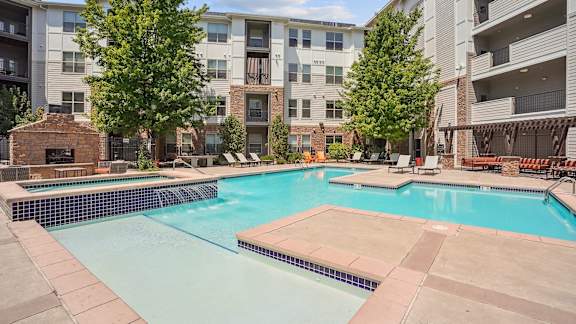
- We have pools at 66% of our communities.
- 69% of our communities have fitness centers, with features such as yoga rooms and free weights.
- 39% of our communities have a health & well-being program for our residents.
- We have off-leash dog parks at 60% of our communities. This is up from 39% in 2020.
- 82% of our properties are within five miles of outdoor amenities, such as parks, bike trails, hiking trails, golf courses, lakes, and/or rivers.
.jpg)
ESG: FEATURED COMMUNITY HIGHLIGHT
We are always looking for opportunities
to talk about our amazing apartment
communities. The annual ESG report
is no exception. The 2021 ESG feature
community spotlights were Civic Lofts
in Denver, Colorado, and 71 France in
Edina, MN. Each community is a prime
example of how we have incorporated
thoughtful sustainability practices in
areas including energy and water efficiency, indoor air quality, recycling and
waste management.